Workshop series

Bio-inspired Deep Learning

A small, intensive workshop series for PhD students and early-career postdocs at the intersection of neuroscience, machine learning and computational modelling.

2026 · Fourth iteration

Neuromorphic Computing

Event-driven computation, spiking neural networks and biologically inspired hardware.

Read article
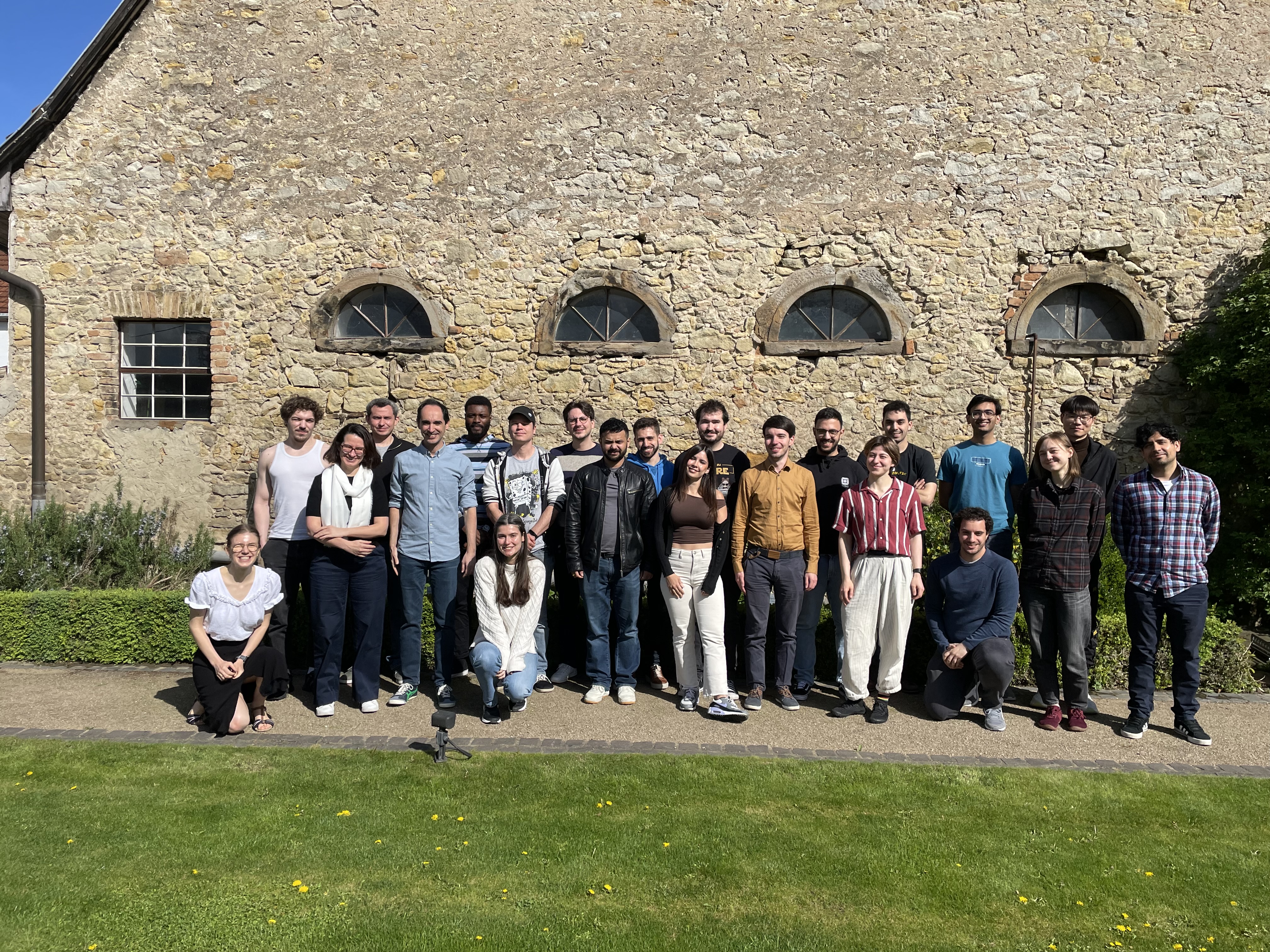
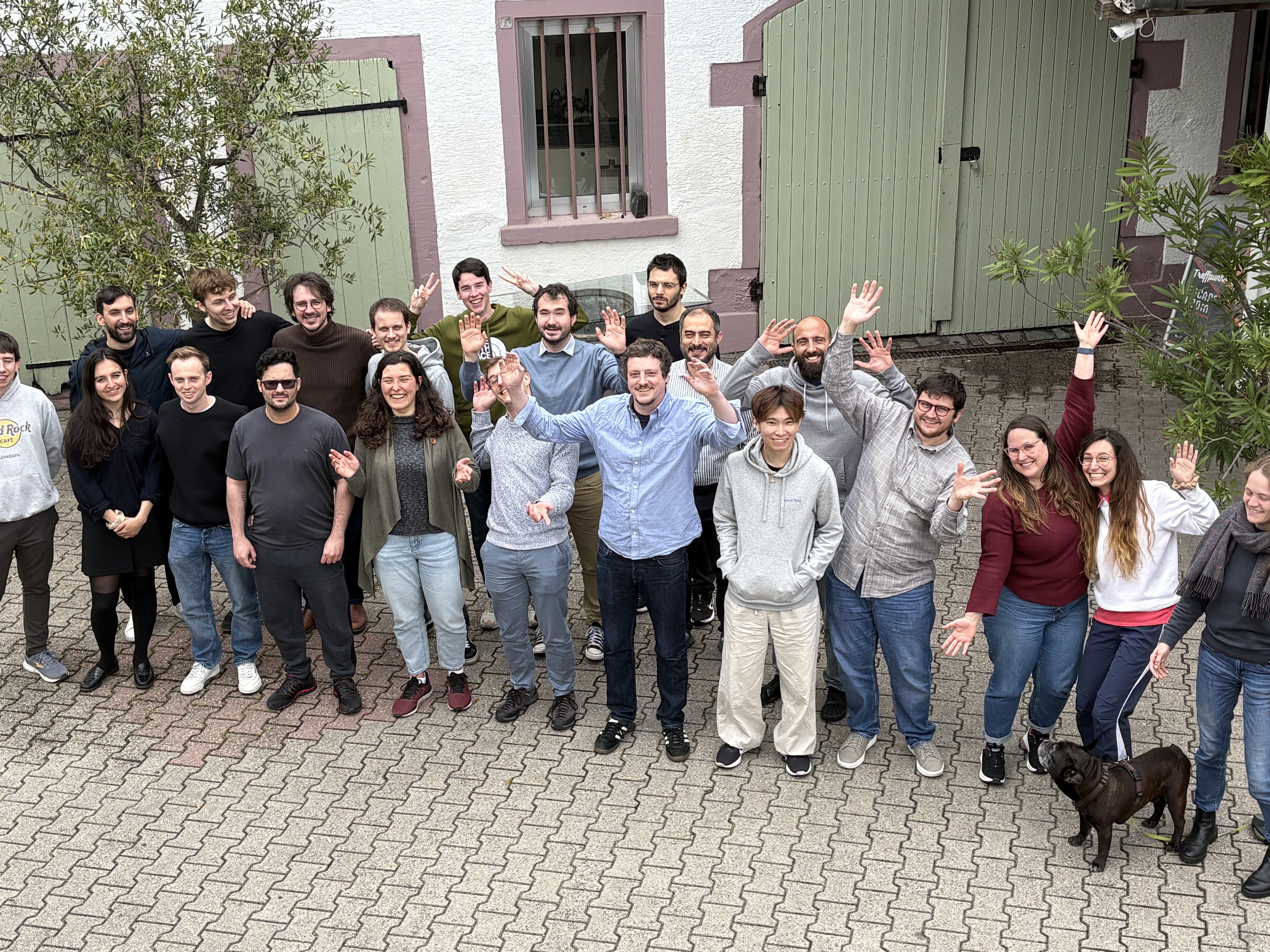
Participants of the Bio-inspired Deep Learning workshop 2026 in Guntersblum
Joachim Herz Foundation

Supported by the Joachim Herz Foundation.

The fourth iteration of the Bio-inspired Deep Learning workshop took place in spring 2026 in Guntersblum. The workshop brought together 16 doctoral students and postdoctoral researchers for three days of project-based work at the intersection of neuroscience, machine learning and computational modelling.

The 2026 workshop focused on neuromorphic computing and was led by Prof. Elisa Donati from the Institute of Neuroinformatics, University of Zurich and ETH Zurich, with support from Dr. Chiara De Luca and Patrick Bösch. Following introductory lectures, participants worked in small groups on focused research questions using spiking neural networks and neuromorphic systems.

Workshop projects

  • A canonical cortical microcircuit on neuromorphic hardware: reproduction of a biologically inspired cortical circuit, robustness to hardware variability, and EMG gesture decoding.
  • Excitatory–inhibitory oscillatory networks: neural encoding strategies for continuous signals and efficient spike-based communication.
  • Robust coincidence detection: selective attention and temporal coincidence detection using spiking neural networks.
  • Spiking neural networks applied to signal processing: spike-based processing of electrodermal activity for physiological-state classification and prediction.
Workshop bulletin ↗
2025 · Third iteration

Dimensionality Reduction & Dynamical Systems

Low-dimensional structure in neural dynamics and complex biological data.

Read article
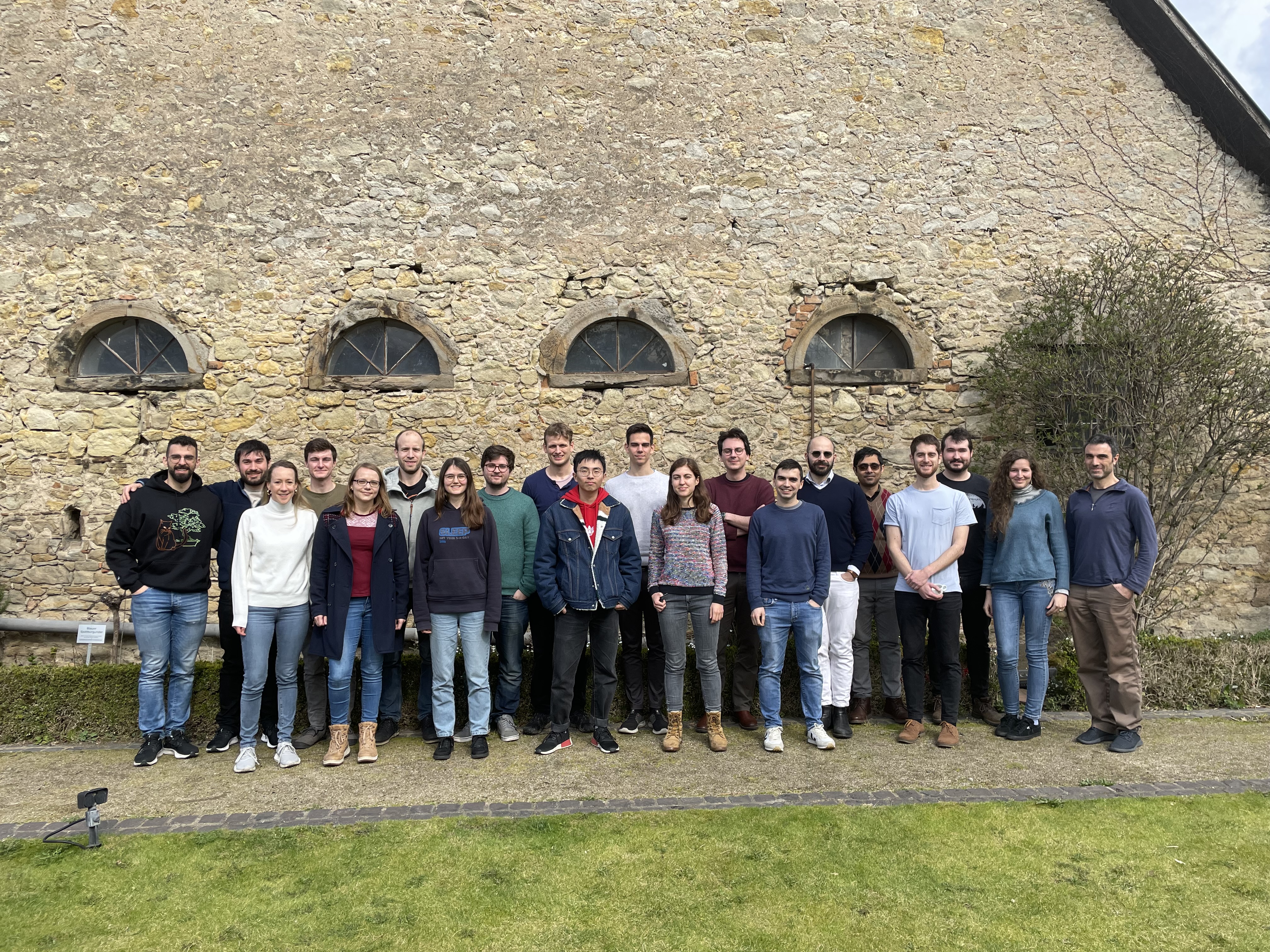
Participants of the Bio-inspired Deep Learning workshop 2025 in Guntersblum
Joachim Herz Foundation

Supported by the Joachim Herz Foundation.

A specialized workshop—the third in a growing series—was held in the spring of 2025 in Guntersblum. This event was generously funded by the Joachim Herz Foundation, with the initiative aiming to create spaces where early-career researchers can connect across disciplines, closely aligning with the goals of the workshop series.

The 2025 workshop brought together 16 doctoral students and postdoctoral researchers from diverse backgrounds in machine learning and the life sciences. Over several intensive days, participants were immersed in state-of-the-art methods at the intersection of these fields, fostering an environment where they could explore concepts beyond their usual research areas.

This year’s focus was on dimensionality reduction techniques—a crucial set of tools for uncovering hidden structure in complex, high-dimensional data. Dr. Angus Chadwick from the Institute for Adaptive and Neural Computation at the School of Informatics, University of Edinburgh, served as the lead instructor. He was joined by his doctoral student Isabel Cornacchia and postdoctoral fellow Arthur Pellegrino, who contributed practical tutorials and mentoring sessions.

The workshop combined lectures with hands-on coding exercises and group research projects. Participants studied how dimensionality reduction and dynamical-systems approaches can reveal structure in neural and biological data.

Workshop bulletin ↗
2024 · Second iteration

Simulation-based Inference

Likelihood-free statistical inference for complex mechanistic models.

Read article
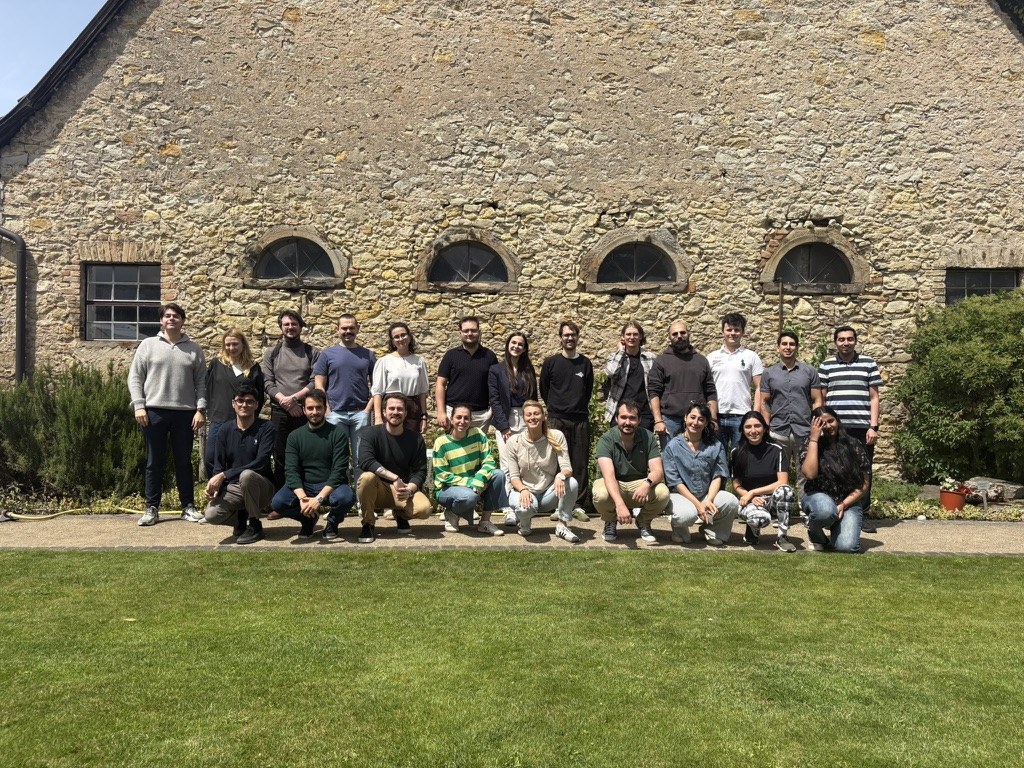
Participants of the Bio-inspired Deep Learning workshop 2024 in Guntersblum
Joachim Herz Foundation

Supported by the Joachim Herz Foundation.

A specialized workshop—the second in a growing series—was held in the spring of 2024 in Guntersblum. This event was funded by the Begegnungszonen program of the Joachim Herz Foundation, which supported interdisciplinary events for young scientists.

By bringing together 16 doctoral students and postdoctoral researchers from diverse backgrounds, the workshop created an interdisciplinary environment in which participants were exposed to state-of-the-art methods at the interface of machine learning and the life sciences.

The 2024 workshop focused on simulation-based inference, a set of techniques for drawing statistical conclusions from complex mechanistic models when conventional likelihood-based inference is difficult or impossible. Prof. Pedro Gonçalves from Neuro-Electronics Research Flanders (NERF) served as the lead instructor. He was joined by Anastasia Krouglova and Guy Moss, who contributed practical sessions and mentoring.

The workshop introduced the motivation and main ideas behind simulation-based inference before participants applied the methods in small-group research projects.

Workshop bulletin ↗
2023 · First iteration

Credit Assignment

Biologically plausible learning mechanisms and alternatives to standard backpropagation.

Read article
Participants of the Bio-inspired Deep Learning workshop 2023 in Guntersblum
Joachim Herz Foundation

Supported by the Joachim Herz Foundation.

A specialized workshop—the first in this series—was held in the spring of 2023 in Guntersblum. This event was funded by the Begegnungszonen program of the Joachim Herz Foundation and was designed to provide a novel opportunity at the intersection of machine learning and neuroscience.

Sixteen doctoral students and postdoctoral researchers were brought together to explore questions in biologically inspired deep learning. Over several days, participants engaged with foundational and emerging ideas in an interdisciplinary setting.

The 2023 workshop focused on the credit assignment problem—one of the central challenges in understanding how learning systems adjust their internal representations in response to feedback. Prof. Rui Ponte Costa served as lead instructor. He was joined by his doctoral students Will Greedy and Joseph Pemberton, who contributed tutorials and practical sessions.

The workshop connected modern deep learning with biological questions about cortical learning and biologically plausible alternatives to standard backpropagation.

Workshop bulletin ↗Workshop GitHub ↗